A groundbreaking DNA study of naturally mummified remains in Siberia has revealed the story of one of the last Indigenous shamans—an 18th-century Yakut woman whose lineage, burial rituals, and genetics challenge long-held assumptions about colonial conquest, cultural survival, and human history.
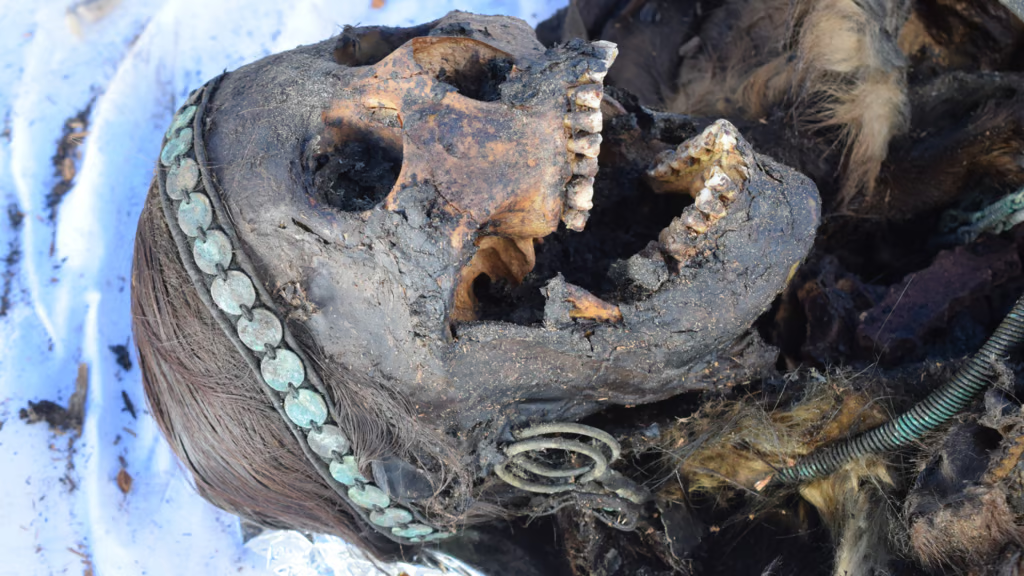
In the frozen heart of northeastern Siberia, where winter temperatures can plunge below –50°C, time itself seems to pause. For archaeologists and geneticists working in the Sakha Republic (Yakutia), this extreme environment has preserved an extraordinary archive of human history—one that is now rewriting what we know about Indigenous resistance, cultural resilience, and even taboo family structures.
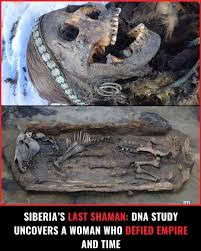
A major archaeogenetic study published in Nature analyzed the remains of 122 naturally mummified Indigenous Yakuts buried between the 14th and 19th centuries. Among them was a striking discovery: the body of a female shaman, believed to be one of the last practitioners of traditional Yakut shamanism, who died more than 250 years ago wearing a vivid red woolen dress.
A Shaman in Red
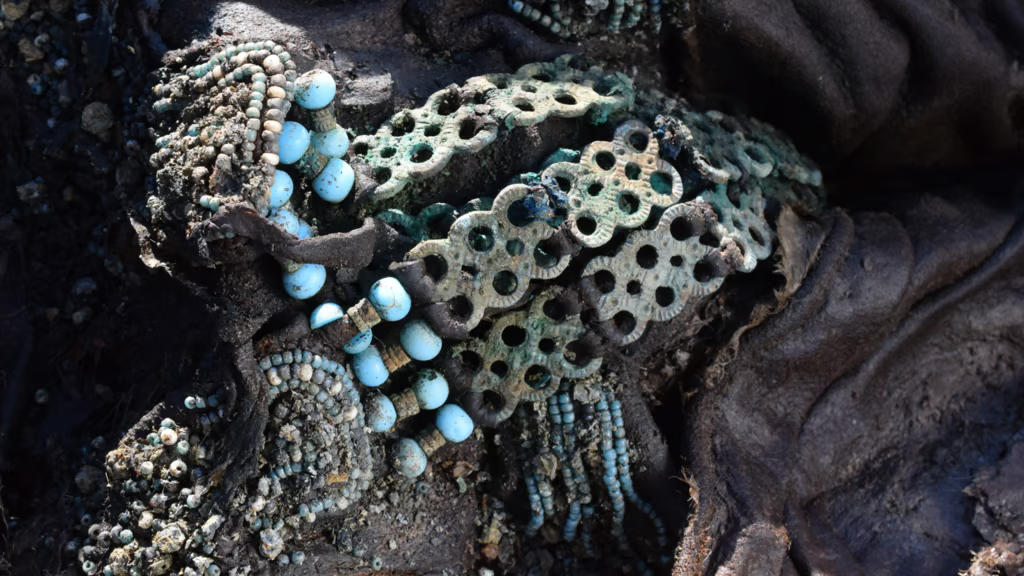
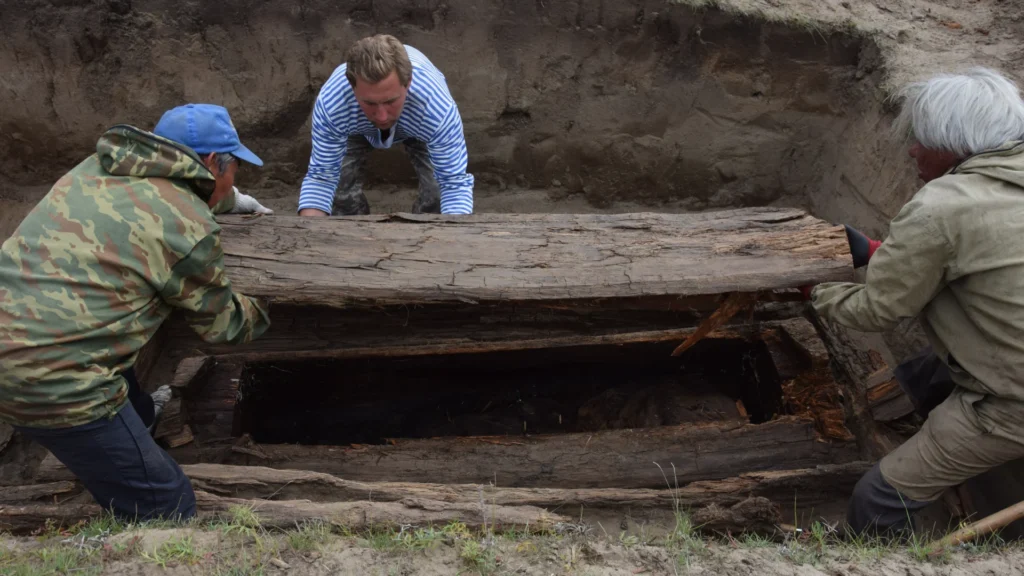
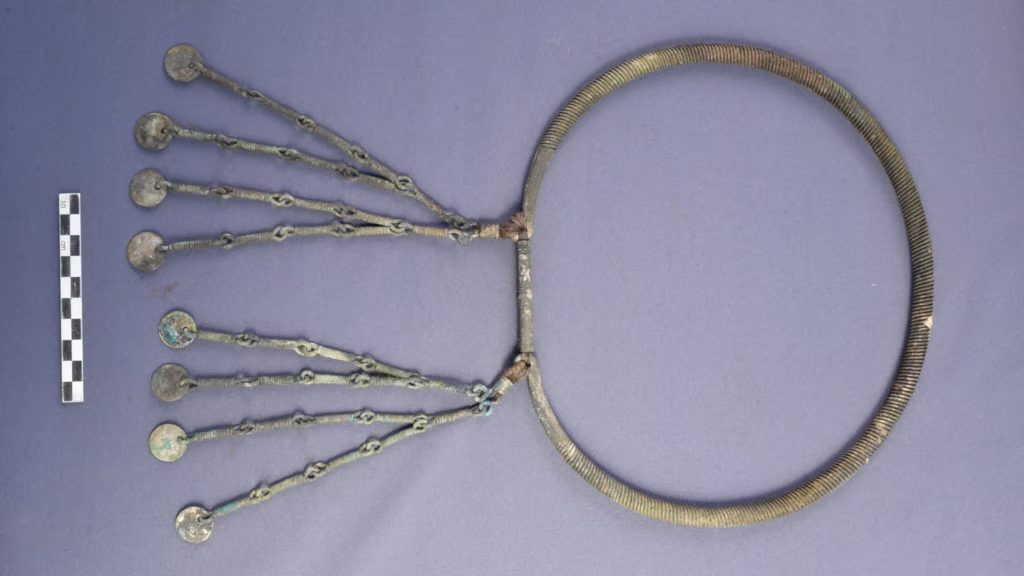
The woman, known to researchers as UsSergue1, was found buried in a coffin carved from a single tree trunk in central Yakutia. She wore multiple layers of clothing, including a traditional fur hat, leather thigh-high leg warmers, and a red wool dress made from imported fabric—an item both rare and symbolically powerful.
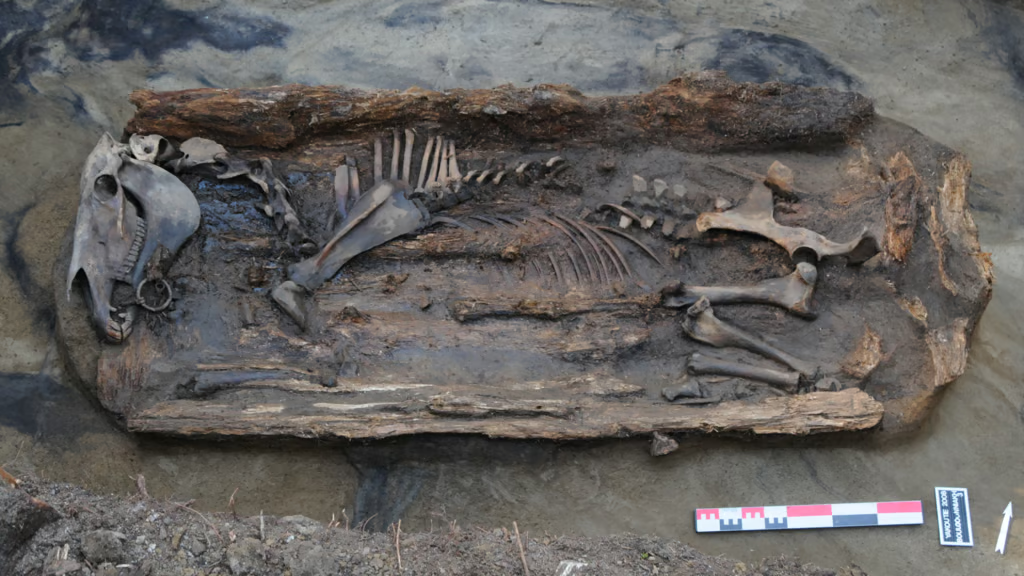
Nearby, archaeologists uncovered a ritual pit containing the skeletons of three horses, one adorned with decorative elements matching the shaman’s clothing. Such offerings were hallmarks of elite shamanic burials, reinforcing the idea that this woman held immense spiritual and social authority within her clan.
Despite aggressive efforts by the Russian Empire to Christianize Siberia beginning in the 17th century, evidence suggests that Yakut shamanism survived well into the late 18th century, long after it was presumed extinct.
“This woman appears to embody the spiritual identity of her clan,” said geneticist Ludovic Orlando, one of the study’s authors. “Her burial reflects a deliberate effort to preserve traditional beliefs during a period of intense cultural pressure.”
A Genetic Surprise
What truly stunned researchers, however, was not just her ceremonial burial—but her DNA.
“The parents were likely an uncle and niece or an aunt and nephew,” Dr. Ludovic Orlando of France’s National Centre for Scientific Research told Live Science.
Genetic analysis revealed that the shaman’s parents were second-degree relatives, meaning they may have been an uncle and niece, aunt and nephew, or half-siblings. This made her the most genetically inbred individual among all the Yakut remains studied.
While such relationships are taboo in many societies today, researchers caution against imposing modern moral frameworks on the past. It remains unclear whether this union was socially accepted, ritually significant, or simply a consequence of elite lineage preservation within powerful clans.
Notably, the shaman descended from one of the most dominant Yakut lineages, raising the possibility that restricted marriage practices were used to consolidate spiritual or political authority.
Resisting Conquest Without Collapse
Beyond the story of one woman, the broader findings of the study challenge conventional narratives of colonial domination.
Unlike many Indigenous populations impacted by European expansion—such as those in the Americas—the Yakuts show remarkable genetic continuity across centuries. Despite Russia’s conquest of Siberia in 1632, researchers found no strong evidence of population collapse, large-scale displacement, or widespread intermixing with Russian settlers.
“The Yakut genetic heritage has remained stable from the 16th century to the present,” said study co-author Perle Guarino-Vignon. “There was no conquest through demographic replacement.”
The likely reason? Geography.
Yakutia is one of the coldest and most remote regions on Earth, making large-scale settlement by outsiders logistically daunting. Instead of replacing the population, Russian influence layered itself over an enduring Indigenous society.
Microbes That Tell the Same Story
Even the microscopic evidence supports this narrative of resilience.
By analyzing dental plaque and teeth, researchers reconstructed the oral microbiome of the Yakut individuals. They expected to see major changes following Russian contact, especially with the introduction of foods like barley, rye, and tobacco.
Instead, the Yakuts’ oral microbiome remained strikingly stable over centuries, further reinforcing the idea that daily life, diet, and cultural practices persisted despite external pressure.
Why This Discovery Matters
The discovery of Siberia’s last shaman is more than an archaeological curiosity. It offers rare, human-level insight into how Indigenous cultures adapt, resist, and endure.
Her red dress, her horses, her lineage, and even her DNA tell a story of defiance without rebellion, survival without assimilation. At a time when many Indigenous histories were erased through violence or disease, the Yakuts preserved their identity in one of the harshest environments imaginable.
Frozen in time, this shaman now speaks again—not through myth, but through science.
And her message is clear: conquest does not always mean collapse. Sometimes, it means survival against all odds.